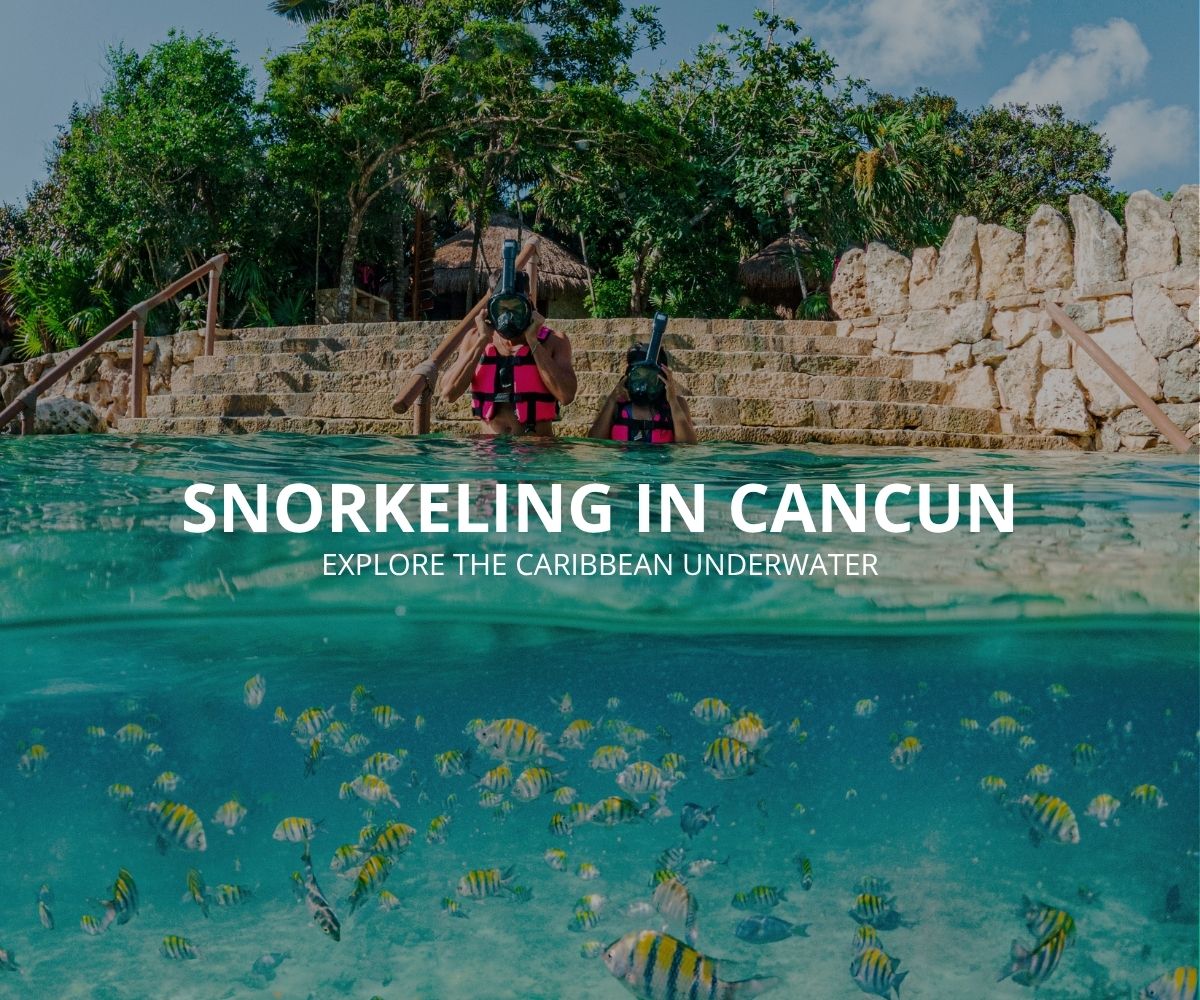
Snorkeling in Cancun: explore the Caribbean underwater
October 10, 2026
Snorkeling in Cancun brings you closer to one of the most diverse marine ecosystems in the Mexican Caribbean. The Mesoamerican Reef System, considered the second-largest barrier reef in the world, extends off the city’s coastline and throughout the Riviera Maya.
Deciding where to snorkel in Cancun depends on your experience level and the landscape you want to discover. Protected reefs feature corals and tropical fish, cenotes replace ocean waves with crystal-clear water, sheltered coves provide an easier introduction, and open-water excursions require stronger swimming skills. Instead of simply choosing a famous location, look for the environment best suited to you.
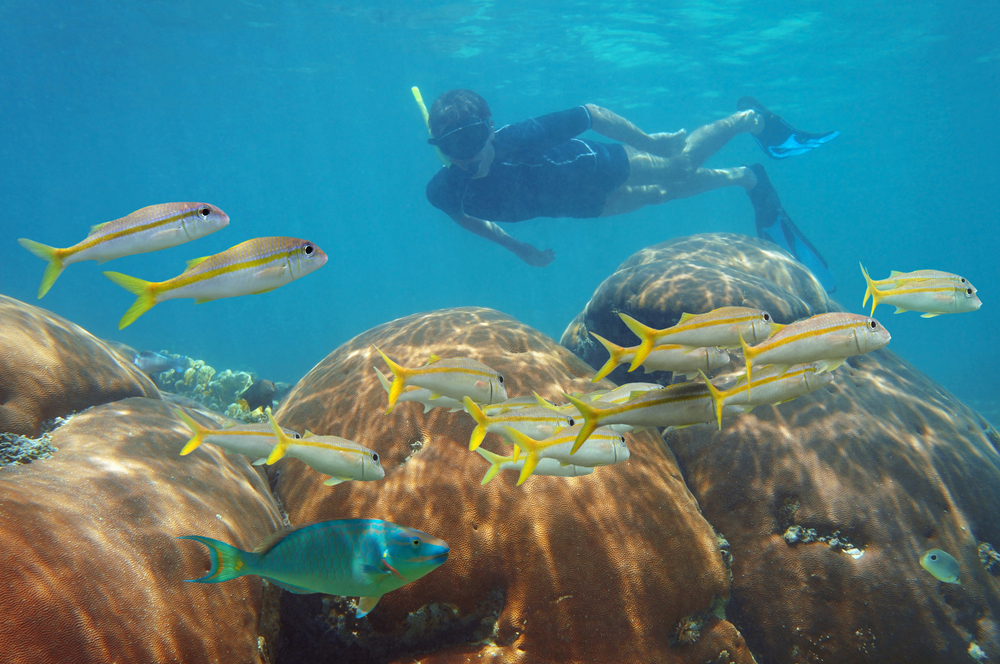
Protected reefs and Caribbean marine life
Reef snorkeling makes it possible to observe corals, angelfish, parrotfish, butterflyfish, barracudas, and schools of small tropical species. Depending on the location and season, you may also see rays or sea turtles. Wildlife sightings are never guaranteed, and animals should never be touched or chased.
Protected and shallow-water areas
Punta Nizuc, at the southern end of the Hotel Zone, has sheltered sections that may be suitable for a first experience, provided the weather and waves are favorable. This area also contains several sculptures from the Museo Subacuático de Arte, known as MUSA, which were installed to create marine habitats and reduce pressure on natural reefs.
Puerto Morelos Reef National Park, south of Cancun, is another option for observing coral formations within a protected area. Access must be arranged through authorized operators, and visitors must follow established rules to prevent damage from anchors, fins, or direct contact.
Open-water excursions
The waters near Isla Mujeres and Isla Contoy offer excursions with greater exposure to wind and currents. These outings are suitable for confident swimmers who feel comfortable away from the coast.
Farther south in the Riviera Maya, Akumal is known for its sea turtles and seagrass beds. The activity is regulated and takes place in designated areas with authorized supervision. Maintaining a safe distance from the turtles is essential to avoid interrupting their feeding or changing their behavior.
Cenotes, rivers, and coves for a change of scenery
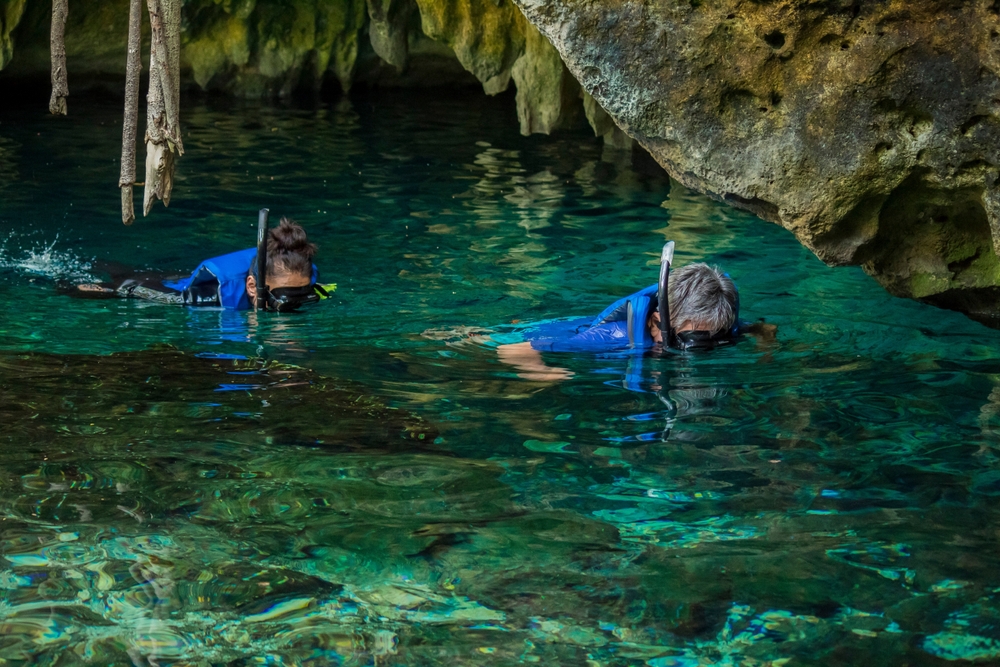
In a cenote, you can float above limestone formations and roots while beams of light create a landscape entirely different from a coral reef. The water is generally very clear, although it is cooler and may include deep or dark sections.
Cenotes with clear water
Cenote Azul, Cristalino, Dos Ojos, and Gran Cenote are some of the region’s best-known options. Conditions vary between open pools, caverns, and areas of considerable depth, so it is important to remain within permitted zones and wear a life jacket when required.
Cenotes have no waves, but that does not mean they are free of risks. Some entrances are slippery, the cool water can cause fatigue, and certain caverns require specialized guides. Never enter enclosed passages without authorization or appropriate equipment.
Coves and underground rivers
Coves combine fresh and salt water in partially sheltered environments. Xel-Há and Yal-Kú, near Akumal, are examples of places where fish can be observed in water that is generally calmer than the open sea.
Underground rivers provide a different experience, with limited natural light and routes between rock formations. They are best suited to those who feel comfortable floating in enclosed spaces and following a defined path. A life jacket helps you maintain your position without striking the bottom or walls.
Choose the experience for your profile
Before booking, consider each participant’s swimming ability, age, and tolerance for waves:
Beginners: A sheltered cove or open cenote is better for becoming familiar with the mask and breathing technique without dealing with ocean currents.
Families with children: Controlled environments with life jackets, straightforward water access, and rest areas are usually more practical. Minimum ages vary by operator.
People who cannot swim: Some surface activities are available with flotation equipment and supervision, but participants must disclose their ability before entering the water. Not every excursion accepts nonswimmers.
Experienced swimmers: Open-water reefs provide more dynamic routes, greater depth, and opportunities to observe extensive ecosystems.
Travelers interested in photography: Cenotes offer distinctive lighting effects, while reefs provide a greater variety of colors and marine life.
The environment should suit the participant, rather than the other way around. If you have concerns about the physical effort or water conditions, a guided excursion can provide a more realistic assessment.
Xcaret Snorkel Tour: a responsible guided experience
If you are looking for a snorkel tour in Cancun and plan to visit Xcaret, the optional activity to the INAH Reef lets you add a marine experience to your day at the park. The excursion departs from Xcaret, near Playa del Carmen, so you must account for transportation from Cancun and have park admission.
What the Xcaret experience includes
The activity lasts approximately an hour and a half. The itinerary includes a boat ride to the reef, a safety briefing, around 45 minutes in the water, and transportation back to the park.
Xcaret provides a viewing mask, fins, a full-face snorkeling mask, and a mandatory life jacket. The indicated maximum depth is five meters, and participants must know how to swim. The minimum age may vary between five and ten depending on weather conditions, while minors must participate with an accompanying adult.
Group capacity is limited, and departure times depend on the weather. Along with the included equipment and instructions, these features make it a particularly complete option if you want to explore a reef with organized logistics.
Rules for protecting the ecosystem
The quality of the experience depends on keeping the reef intact. During any excursion:
Do not touch, step on, or lean against corals.
Keep your fins away from the bottom to avoid stirring up sediment.
Do not feed, chase, or hold animals.
Maintain a respectful distance from turtles and rays.
Do not collect shells, coral fragments, or other natural items.
Follow the guide’s route and instructions.
Do not leave trash on beaches, in cenotes, or on boats.
Part of the revenue generated by Xcaret’s activity goes to Mexico’s National Commission of Natural Protected Areas to support the conservation of the country’s natural and cultural heritage.
Tips for enjoying the water
Time of day and visibility
The early hours generally bring fewer visitors, more comfortable temperatures, and sometimes less wind. However, visibility depends on rainfall, waves, and currents. Always check the day’s conditions instead of relying only on the season.
November through April typically has less rain, although cold fronts can affect sea conditions. Cenotes tend to provide more consistent visibility throughout the year, but heavy rainfall may still change access conditions at certain locations.
Equipment and personal protection
Use a mask that seals correctly without feeling excessively tight.
Adjust your fins before entering the water to prevent rubbing.
Bring a swimsuit, towel, and dry change of clothes.
Wear UV-protective clothing to reduce sun exposure.
Apply biodegradable sunscreen permitted by the location.
Bring water to stay hydrated before and after the activity.
Consider a short wetsuit for cenotes with cooler water.
Do not use damaged equipment or continue if the mask makes breathing difficult.
Frequently asked questions
Is snorkeling suitable for people who cannot swim?
It depends on the location and operator. Some coves or open cenotes allow visitors to float with a life jacket and supervision, while reef excursions may require swimming ability. Xcaret’s activity at the INAH Reef specifically establishes this skill as a requirement.
Which locations are best for families?
Sheltered coves, open cenotes with visitor facilities, and shallow areas with guides are usually the most comfortable options. Before booking, check the minimum age, depth, ease of water access, and availability of children’s life jackets.
When is visibility best for snorkeling?
At sea, mornings with little wind generally provide better conditions. The relatively dry months from November through April may offer good clarity, although the daily state of the water is the determining factor. Cenote visibility usually remains more consistent throughout the year.
Dive into the Mexican Caribbean responsibly
The best snorkeling in Cancun is the experience that matches each participant’s ability and interests, whether that means protected reefs, calm coves, transparent cenotes, or open-water excursions. Choosing the right environment is the safest and most responsible way to discover the underwater world.
For travelers visiting Xcaret and seeking an organized reef excursion, its guided activity combines equipment, instructions, and supervision in an accessible amount of time. Observing without touching and following the guide’s directions are the best ways to enjoy snorkeling in Cancun while helping preserve the diversity of the Mexican Caribbean.
Related posts
Parks


Tours



Xcaret Xailing


Hotel





Grupo Xcaret
Hotels
Xcaret - Mexico, Chetumal - Puerto Juarez Federal Highway, Km. 282, Rancho Xcaret,Playa del Carmen,Quintana Roo. México. CP 77710.
Telephone USA/CAN: 1-855-326-0682 Open Monday to Friday from 7:00 a.m. at 12:00 a.m. | Saturdays and Sundays from 7:00 a.m. at 10:00 p.m. Quintana Roo local time.
©Copyright 2022 Experiencias Xcaret Parques, S.A.P.I. de C.V
